
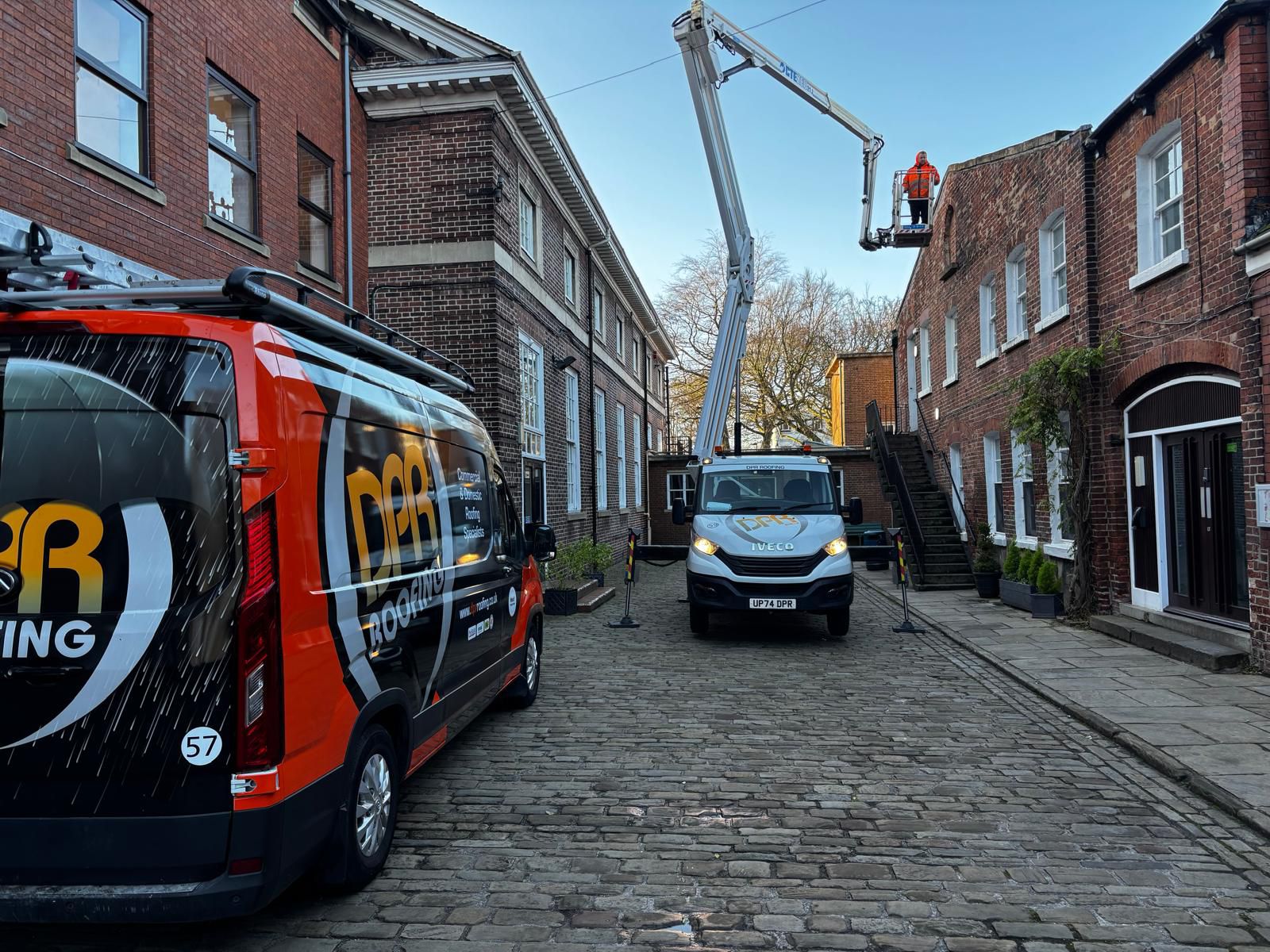
There’s a certain feel to November in Leeds. The clocks have gone back, dusk arrives before you’ve even boiled the kettle and that familiar mix of drizzle, sharp showers and the odd sideways squall rolls in from over the Aire. Streets around Headingley glisten after early sunsets, pavements in Roundhay stay damp most of the day, and gutters everywhere begin to earn their keep.
It’s also the month when homeowners suddenly start wondering: is it too late for a roof inspection, or is November actually the right time?
Here’s the short answer: November is not only a perfectly good time for a roof inspection, it’s often when problems finally reveal themselves. And catching those problems now can save you a winter’s worth of hassle.
Below is a Leeds based guide to understanding why November is still a smart month to get your roof checked, what you can safely spot yourself, and when to call in a professional.
1. November weather exposes weaknesses
After an often wet autumn, November’s colder nights and wind-driven rain are excellent at showing up faults. A slipped tile that went unnoticed in summer suddenly lets in just enough water for a quiet drip in the loft. Flashings that held through September showers may give up when the first real northerly blows across the city.
If you live near the ridge lines around Chapel Allerton or on the more exposed edges of Middleton, you’ll know how quickly a weather front can turn. November makes the invisible visible.
What you might notice from the ground:
- Uneven rooflines or a tile sitting slightly proud
- Gutters overflowing even in moderate rain
- A new stain on a bedroom ceiling
- More moss washing out of downpipes than usual
All of these are signs that a November inspection is more timely than late.
2. Gutters are at their fullest (and most telling)
By November, Leeds’ leaves have pretty much had their say. Streets in Adel, Roundhay and Woodhouse are thick with them, and gutters feel the strain.
Blocked gutters cause more November roof problems than almost anything else because:
- Water overflows under the first course of tiles
- Eaves get saturated and take ages to dry in cooler weather
- Wind gusts rattle already loose brackets and joints
A quick ground-level look during or just after rain can tell you plenty. If you see water spilling over edges or pouring straight down brickwork, it’s time for a professional to take a closer look.
3. Loft spaces show clearer signs in colder weather
Here’s a small Leeds homeowner trick: November is one of the best months to spot loft-level problems because cold air meeting warm indoor air exaggerates moisture issues.
After a shower, pop into the loft with a torch (feet on joists, board if you have one).
You’re looking for:
- Dark patches on felt
- Drips forming on nail tips
- Damp insulation
- Daylight visible where it shouldn’t be
If the loft smells musty or the felt looks blotchy, that’s reason enough for an inspection.
4. It’s still early enough for repairs before winter sets in
November gives you a window. Not a huge one, but a workable one. Roofers can still carry out repairs safely and effectively before temperatures drop too low to use certain materials or before persistent wet spells settle in.
In Leeds, December often brings more prolonged rain, more frost and fewer suitable working days. Booking an inspection now means:
- You can plan repairs rather than panic
- You get issues fixed before winter magnifies them
- You avoid the January rush when leaks become urgent
Think of November as the last calm before the winter queue forms.
5. Temperature swings can worsen existing problems
Late autumn often brings freeze–thaw patterns, particularly in areas sitting slightly higher like Horsforth, Alwoodley and parts of Bramhope. Water gets into hairline cracks, freezes overnight, expands and opens those cracks further.
Tiles, mortar joints on ridges and hips, and lead flashings all feel the strain.
A November inspection can stop a small fault developing into a sorted-out-in-March kind of repair.
6. It’s a good month to check flat roofs too
Leeds has plenty of extensions, dormers and garage roofs with felt or membrane coverings. November’s colder nights and persistent damp expose issues quickly.
From the ground or an upstairs window, you might spot:
- Areas where water lingers more than a day
- Blisters or small bubbles in felt
- Edges lifting slightly in the wind
Flat roofs rarely fail overnight. They give clues first. November is a great time to catch them.
7. Safety first: what you can check vs what you shouldn’t
Stick to checks you can do from the ground or safely inside the loft. No ladders. No roof access. No leaning out of windows.
Safe homeowner checks:
- Ground-level look at tiles, gutters, and chimney condition
- Loft inspection with a torch
- Observations during heavy rain
Leave to the pros:
- Anything involving height
- Repointing, replacing tiles or repairing flashings
- Gutter cleaning above safe reach
- Flat roof repairs
- Any suspected structural movement
Professional roofers bring the right access equipment, training and insurance. November conditions are slippery, cold and occasionally unpredictable. It’s not the month to try DIY fixes.
8. Leeds’ micro-climates make timing matter
The city has a mix of exposed ridgelines, shaded streets and valley bottoms. That means your roof might behave differently from one just a few miles away.
Examples:
- Chapeltown and Meanwood: heavy tree cover means wetter roofs
- Headingley and Hyde Park terraces: older chimneys and flashing prone to wind-driven rain
- Garforth and Crossgates: flatter terrain but strong gust channels
- Pudsey and Farsley: some roofs sit right in the path of westerlies
A November inspection takes these local quirks into account.
9. November is ideal for documenting condition before winter
If you’ve ever had to make an insurance claim after storm damage, you’ll know how helpful pre-winter documentation is. A professional inspection provides clear photographic evidence of the roof’s condition before winter hits.
This can be particularly useful if you live in older Leeds terraces or semis where roofs have a mix of materials and repairs built up over decades.
10. Peace of mind before the real weather arrives
A roof inspection isn’t just about fixing things. It’s about knowing what you’re heading into winter with.
In many cases, homeowners discover that only a couple of small jobs are needed: clearing the gutters, re-fixing a ridge section, bedding in a lifted flashing, or replacing a single cracked tile. Small and manageable.
The alternative is spending December wondering whether that drip is going to return.
Time to get your roof winter-ready?
If you’re wondering whether November is too late, it isn’t. It’s one of the most revealing and worthwhile times to check your roof. The weather shows up the problems, but it hasn’t yet made it so difficult that repairs become a race against daylight or frost.
DPR Roofing Leeds works across the city, from stone terraces in Chapel Allerton to new builds in Seacroft and all the way out towards Bramhope and Pudsey. We bring safe access, clear reporting and practical advice that keeps your home dry through whatever winter decides to send our way.
If you’d like a calm, straightforward assessment of your roof before the real cold lands, get in touch with us today and we’ll get you booked in.